Ted Moskovitz
Anthropic
The Research and Applied AI Summit (RAAIS) is a community for entrepreneurs and researchers who accelerate the science and applications of AI technology. In the run up to our 10th annual event on June 12th 2026 in London, we’re running a series of speaker profiles to shed more light on what you can expect to learn on the day!
At RAAIS we have a focus on translating cutting edge technology and research into production-grade products for real-world problems.
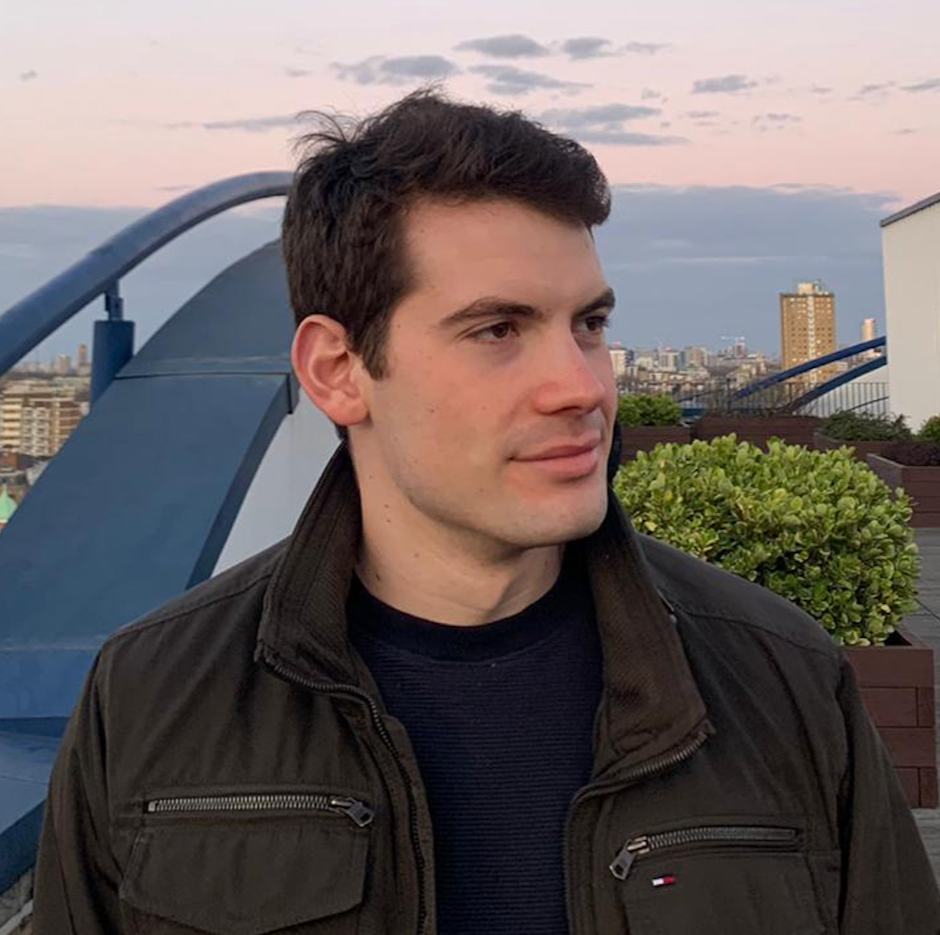
Ted leads the Science of Scaling team at Anthropic. His background spans reinforcement learning, optimisation, neuroscience, and large-scale deep learning - a combination that makes him especially relevant to anyone trying to understand how frontier AI systems improve, where they fail, and what it takes to make progress reliable rather than anecdotal. At a time when scaling is still one of the central engines of AI progress, that work sits close to the core of how advanced systems are actually built.
From multitask reinforcement learning to scaling
Before Anthropic, Ted did his PhD at the Gatsby Computational Neuroscience Unit in London, advised by Maneesh Sahani and Matt Botvinick. His PhD research focused on multitask reinforcement learning in brains and machines, giving him a foundation in questions of transfer, generalisation, and how learning carries across tasks rather than being solved from scratch each time.
That background matters because these are not only reinforcement learning questions. They are also scaling questions. As models grow, one of the most important issues is not simply whether they get better, but how capabilities generalise, which trade-offs emerge, and what kinds of optimisation behaviour actually hold up across settings. Ted’s research has consistently sat close to those underlying mechanics.
Optimisation, constraints, and robust progress
Ted also interned at DeepMind, where he worked on constrained reinforcement learning, and at Uber AI Labs, where he worked on optimisation for large-scale deep learning. Earlier in his career, he worked on biologically-plausible deep learning at Columbia and neural encoding at Princeton.
His selected publications reflect that mix of interests: constrained RLHF, constrained MDPs, multitask policy optimisation, reinforcement learning representations, and large-scale optimisation. They include Confronting Reward Model Overoptimization with Constrained RLHF (ICLR 2024 Spotlight), ReLOAD on constrained MDPs (ICML 2023), and Towards an Understanding of Default Policies in Multitask Policy Optimization (AISTATS 2022, Best Paper Award Honorable Mention).
Why Ted’s work matters now
The frontier in AI is no longer defined only by whether models get better with scale. It is increasingly defined by whether we understand how and why they do. As systems become more capable, questions of optimisation, transfer, constraints, and generalisation stop being side issues and start shaping what progress actually looks like.
That is what makes Ted’s work important. The science of scaling is not separate from frontier model development. It is part of the effort to understand which gains are robust, which behaviours transfer, and what it takes to make increasingly powerful systems usable in practice.
Ted’s background
Before Anthropic, Ted worked on biologically-plausible deep learning at Columbia and neural encoding at Princeton, before moving into PhD research on multitask reinforcement learning at Gatsby and later leading the Science of Scaling team at Anthropic. That trajectory gives him a perspective that cuts across theory, empirical learning dynamics, and frontier model development.